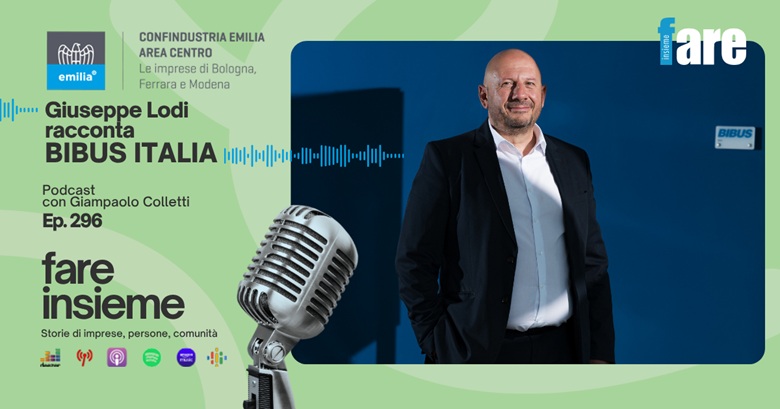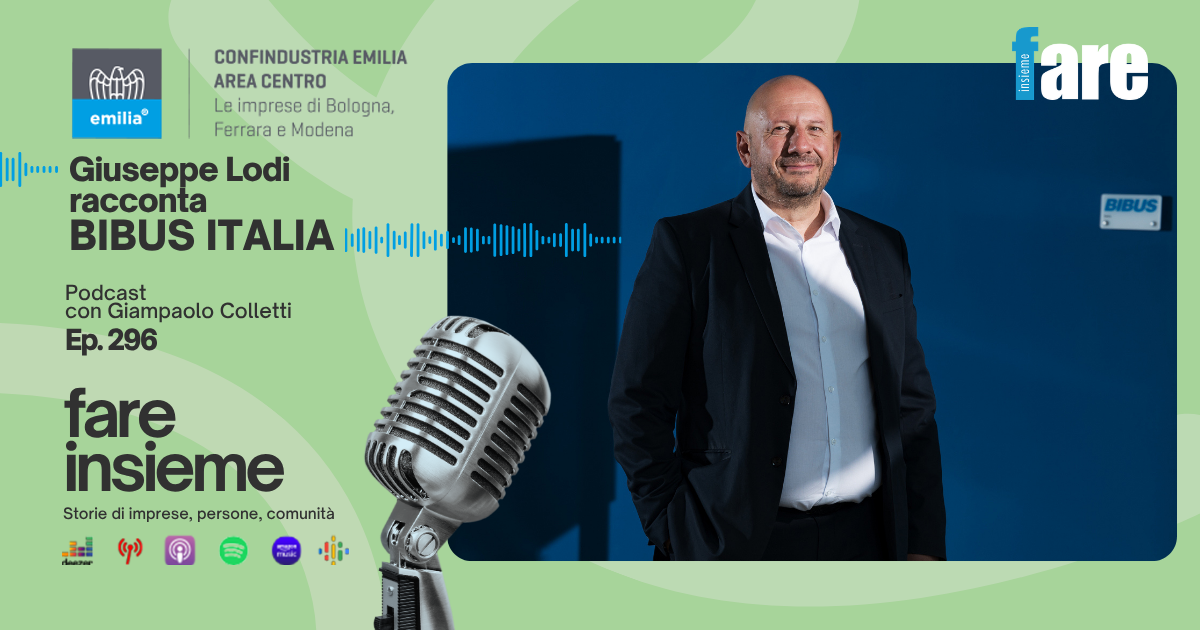
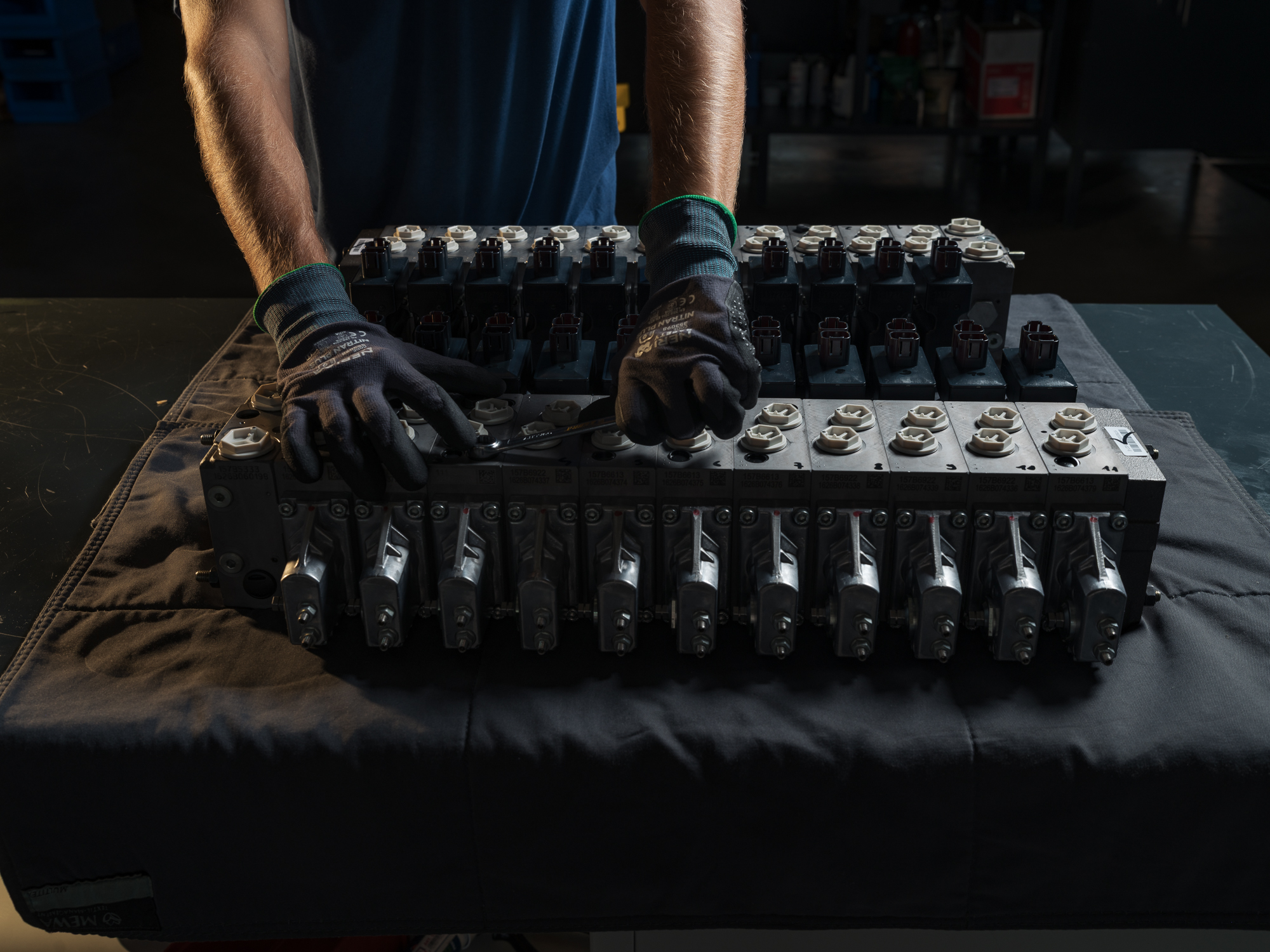
Based in San Giovanni in Persiceto, BIBUS Italia anticipated the transformation of manufacturing, moving from technology distribution to an integrated service model. Today, competitive advantage depends not just on the product itself, but on everything that supports it. For FARE INSIEME, Giampaolo Colletti interviews Giuseppe Lodi, Managing Director of BIBUS Italia
by Giampaolo Colletti
@gpcolletti
Photocredit: Giacomo Maestri e Francesca Aufiero
For decades, industry measured its value by the products it manufactured. Whatever the product. Nowadays, the challenge is more complex, increasingly centred on what happens before and after production. We are talking about collaborative design, logistics, warehouse management, technical support, spare parts availability and the reduction of hidden costs. It is a quiet but profound transformation that has changed the very way manufacturing works. Now imagine a company in Emilia seeking to make sense of this complexity. To simplify it, without oversimplifying it.
Company profile. We are in San Giovanni in Persiceto, in the province of Bologna, at the heart of Emilia’s Packaging Valley and one of Italy’s leading industrial districts for mechatronics, automation and hydraulics. Twenty kilometres from Bologna, the landscape of the plain takes on a different rhythm. Fields give way to industrial buildings, one industrial district follows another, and manufacturing becomes a shared language. As we’ve noted before, this is one of Emilia’s beating industrial hearts: a place where know-how meets innovation. This is where BIBUS Italia was established, building a new approach to partnerships with businesses. Giuseppe Lodi has led the Swiss group’s Italian subsidiary from the outset, in a market still dominated by the traditional component distribution model. In 2012, a new business plan took shape with a clear objective: to bring the group’s European model to Italy, transforming a sales organisation into a systems integrator capable of supporting customers throughout the product lifecycle. “We have developed an approach centred on the needs of SMEs, working alongside them as a technology partner throughout the project lifecycle,” explains Giuseppe Lodi, Managing Director of BIBUS Italia. It is an approach we would now call servitisation, but at the time it was something of a gamble. We are in an area that epitomises Emilia’s manufacturing tradition. Around forty people work here, supported by branches in Chivasso and Soresina, serving customers throughout Italy. Behind the company stands an international group operating in numerous European and Asian countries. Yet the strength of the Italian organisation has always been its ability to adapt a global model to the needs of small and medium-sized enterprises. And this is where the real insight emerged. SMEs generate 85% of Italy’s gross domestic product. These businesses excel at manufacturing, but often have to contend with rising indirect costs. Oversized warehouses, capital tied up in components, complex logistics processes and unpredictable procurement lead times. “We realised that companies’ competitiveness no longer depended solely on how well they manufactured their products, but also on their ability to eliminate hidden waste,” recalls Lodi.
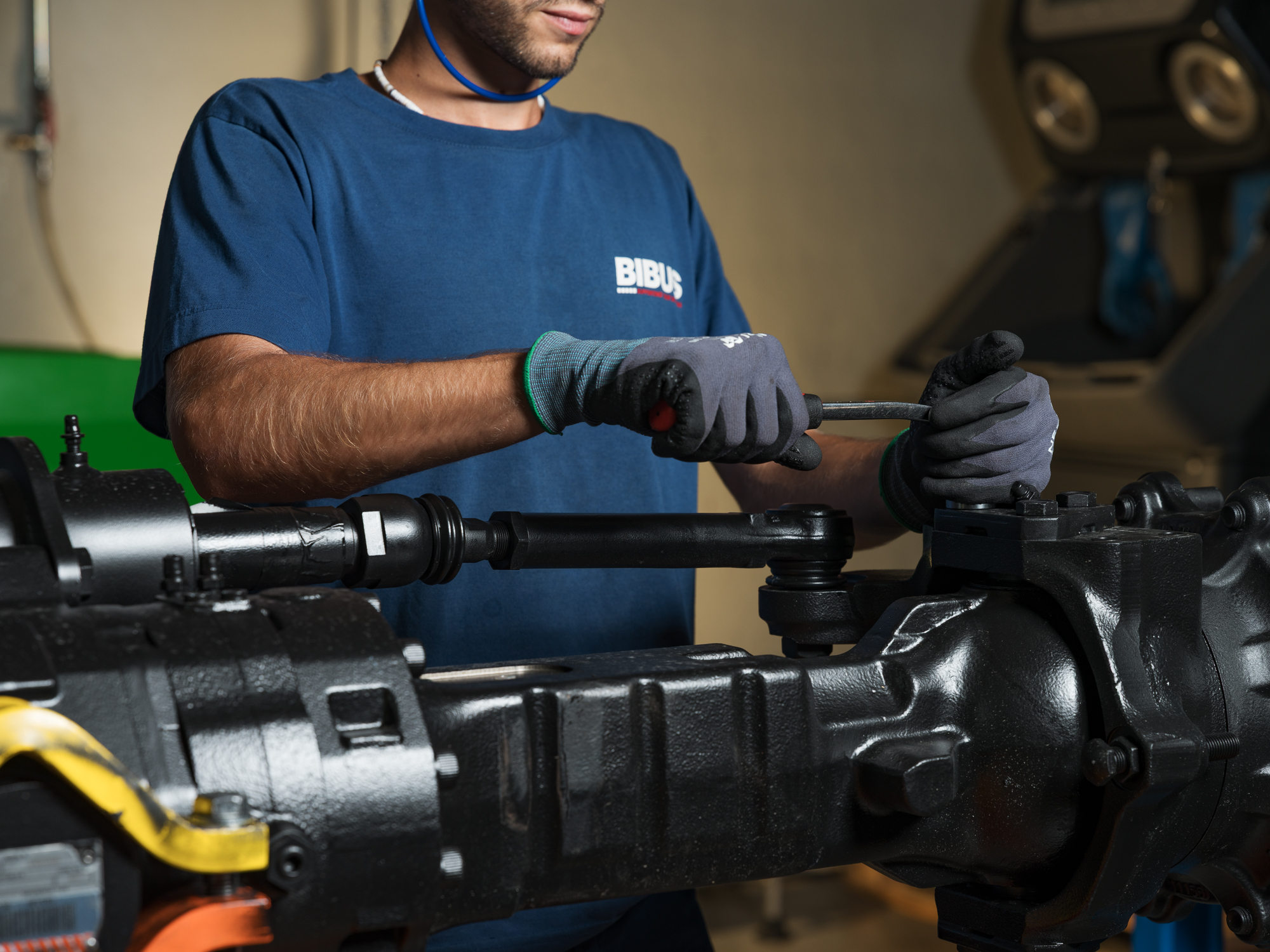
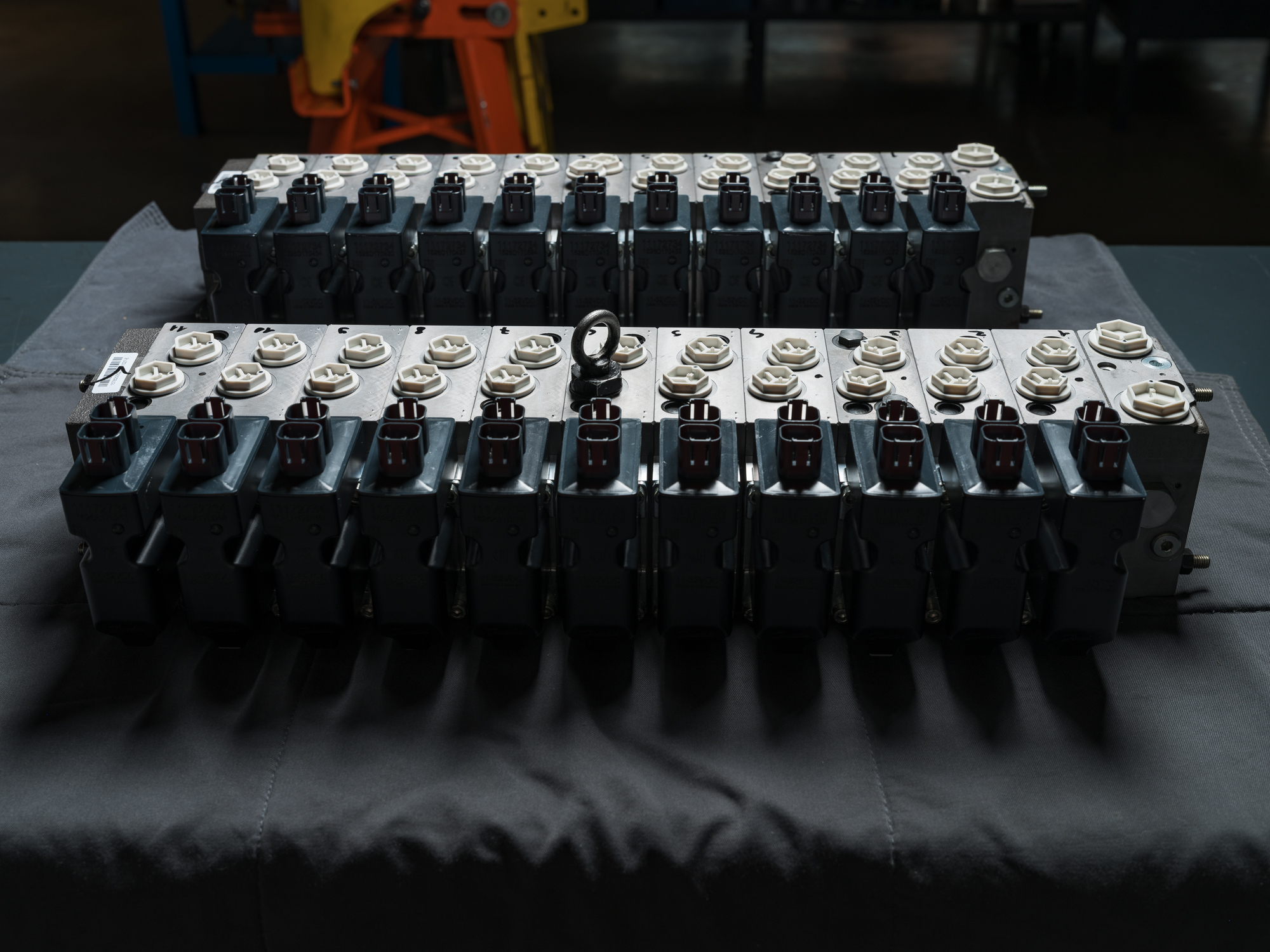
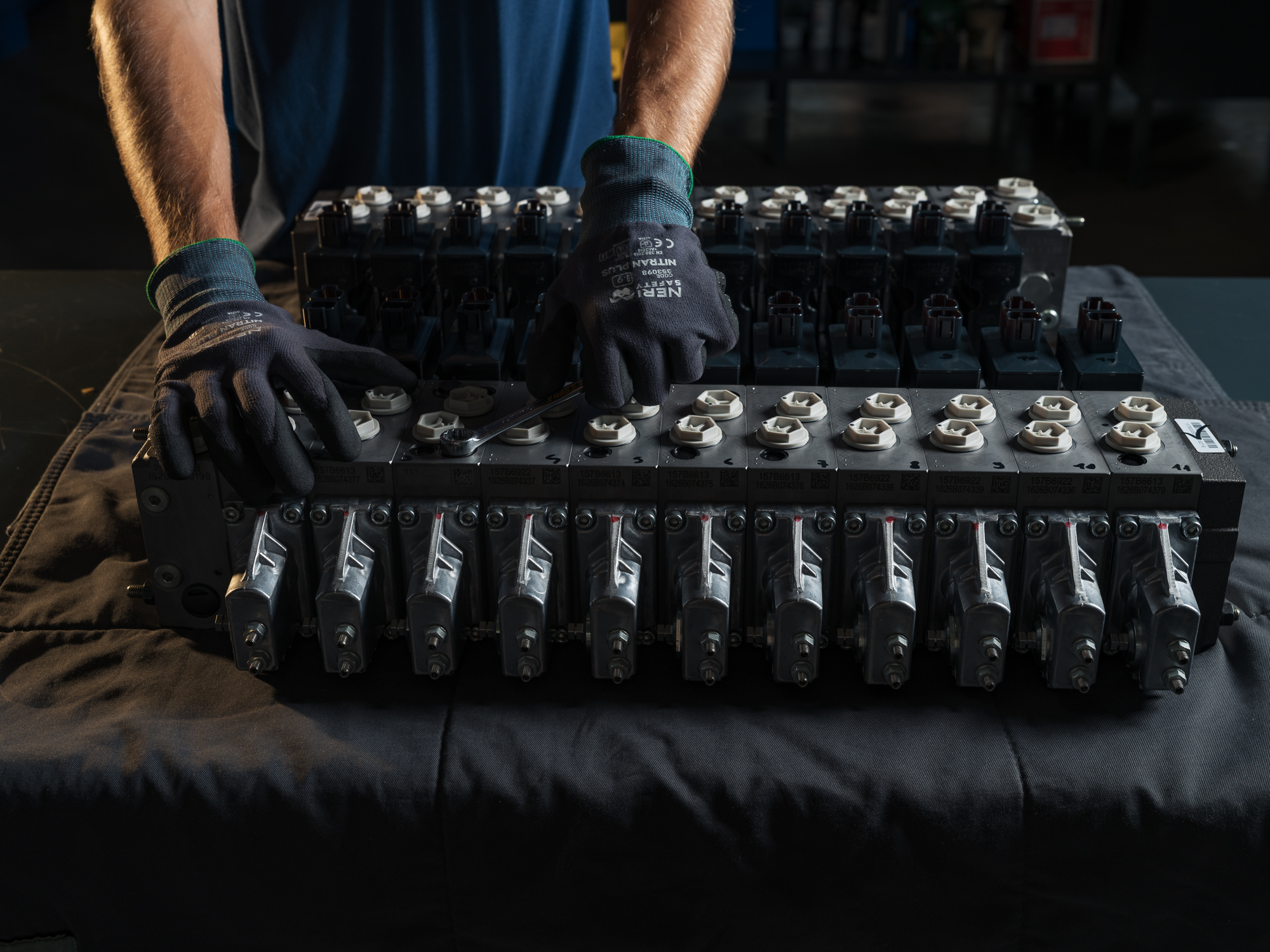
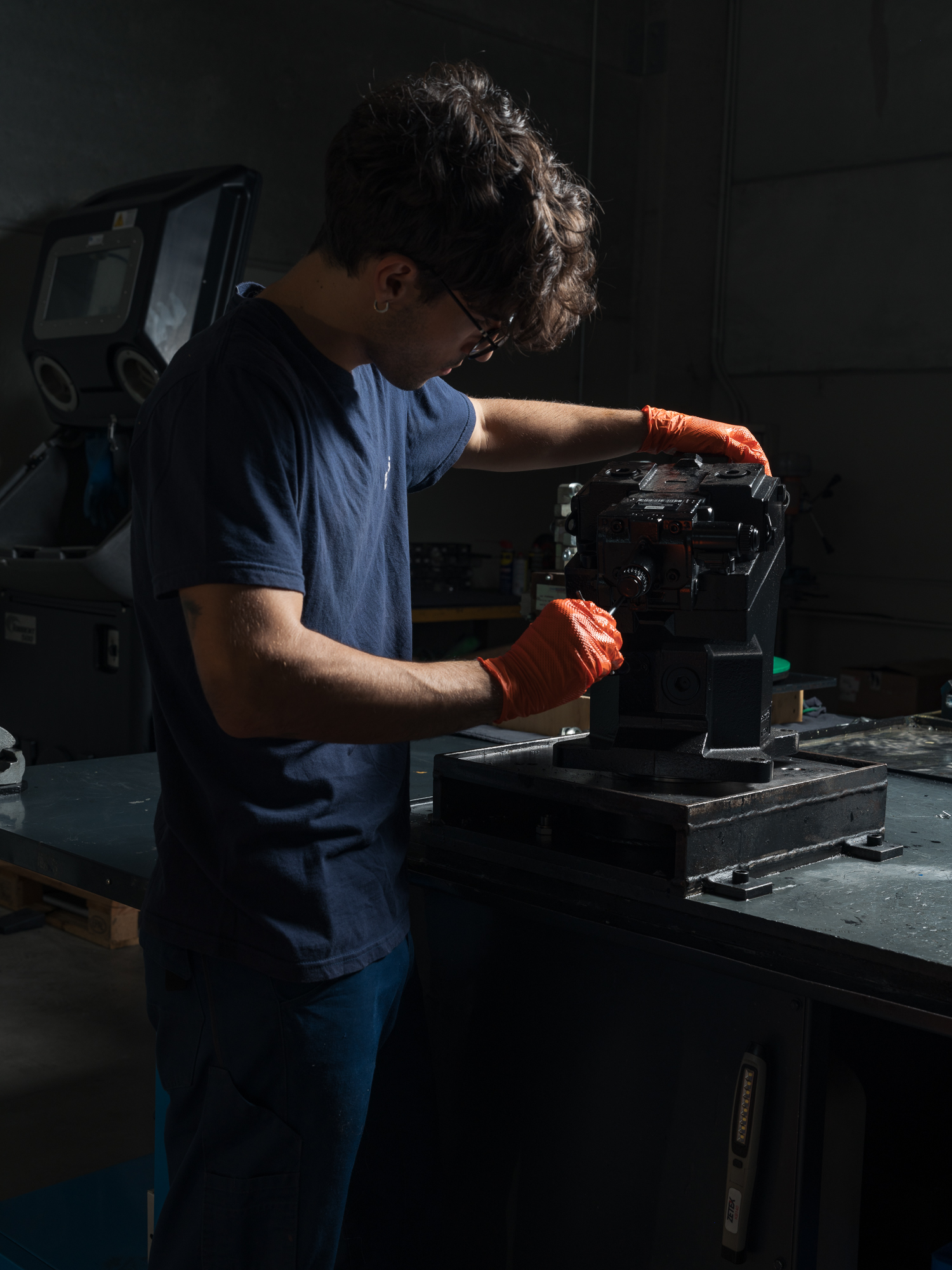
Added value. And they delivered. Let me explain how. BIBUS Italia operates in hydraulics, mechatronics, automation and electrification. However, calling it simply a distributor would be an understatement. The company develops co-engineering projects with customers, builds integrated systems, organises component logistics, manages dedicated warehouses, provides after-sales support and helps businesses design new solutions. Inspired by leading American and European practices, this model is designed to simplify the operational complexities faced by manufacturing companies. “Our aim is to create a win-win relationship: when customers become more efficient, our value grows too,” says Lodi. BIBUS technicians and customers’ design engineers work side by side from the earliest stages of development, reducing project timescales, costs and design risks. “Innovation no longer happens in isolation. It comes from bringing together different areas of expertise,” Lodi explains. Automation follows the same principle. Technologies are becoming increasingly sophisticated, but their value depends on people’s ability to use and integrate them into production processes. “Machines will continue to evolve, but it will always be people who make the decisions that make a difference. We want to remain the technology partner of choice for Italian businesses, supporting them as they innovate and pursue sustainable growth. Because our success inevitably depends on the success of our customers,” concludes Lodi. “For years, we believed that industrial competitiveness depended primarily on products. Now we are discovering that it stems from what we cannot see: services, expertise, relationships, logistics and support. Everything that makes a business easier to manage and more responsive in a competitive market.”
https://podcast.confindustriaemilia.it/
Read the other interviews