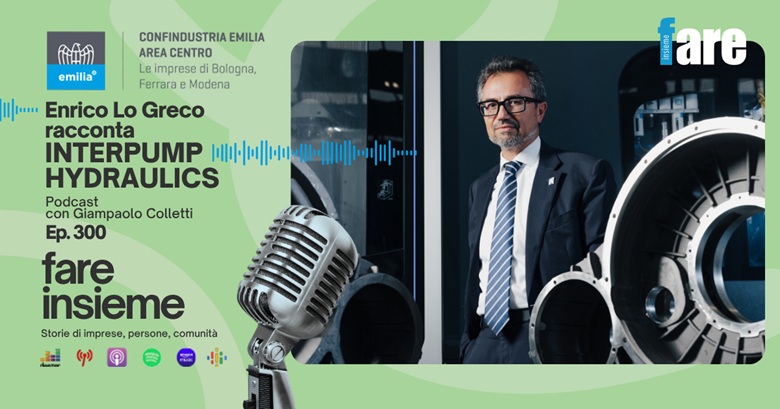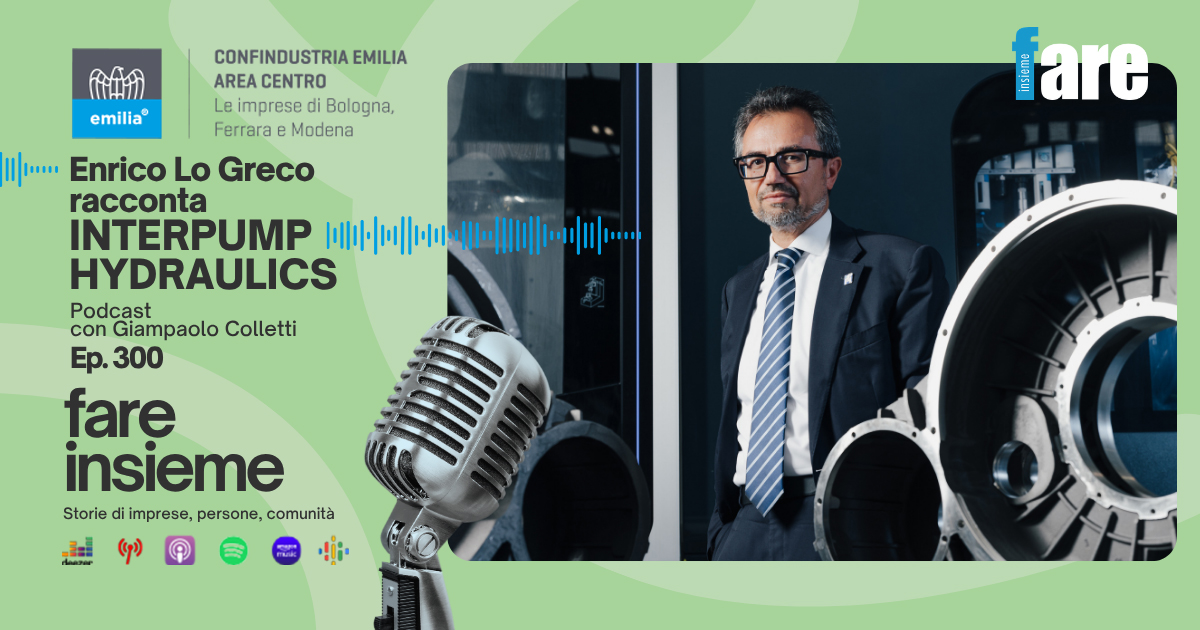
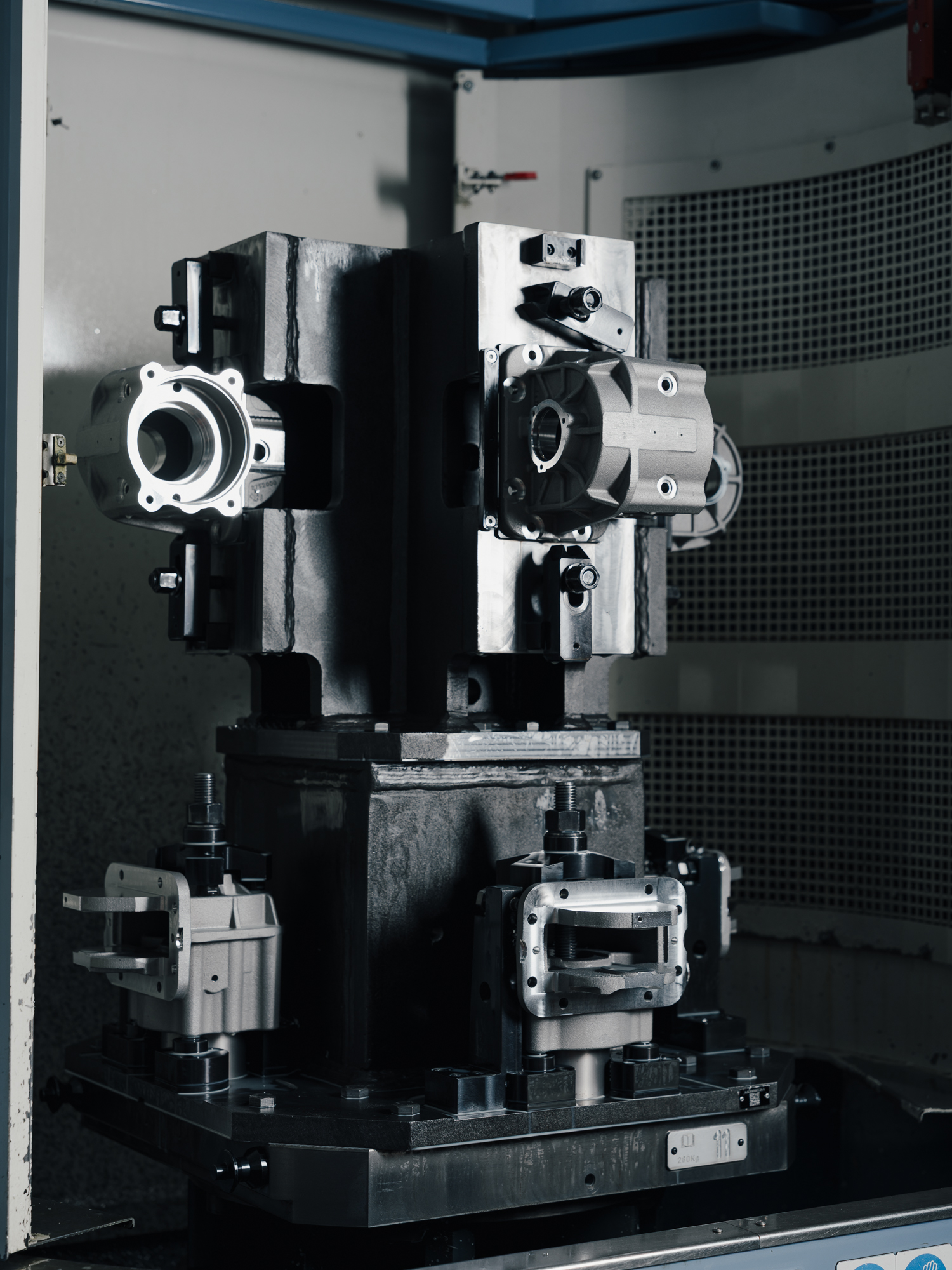
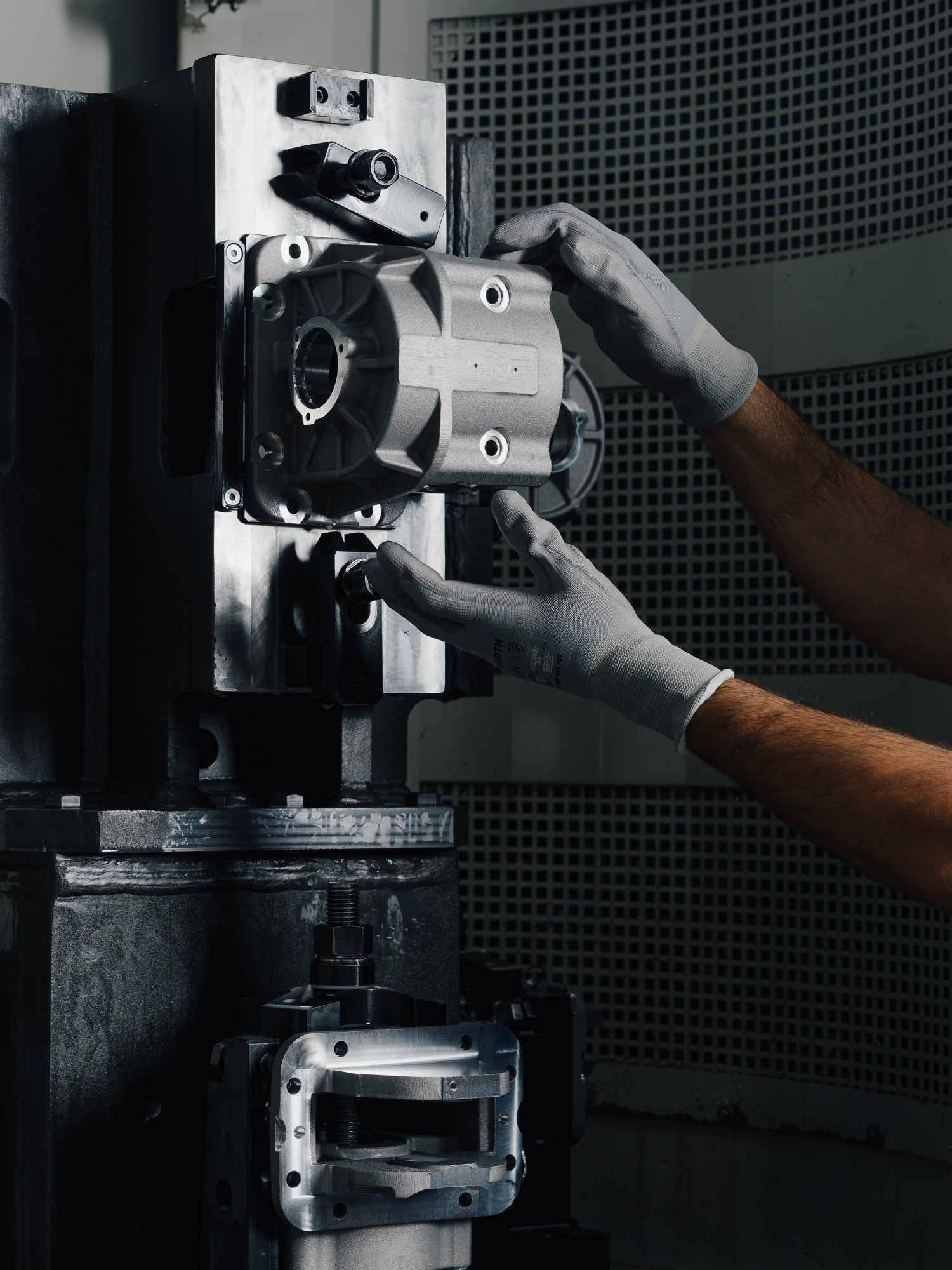
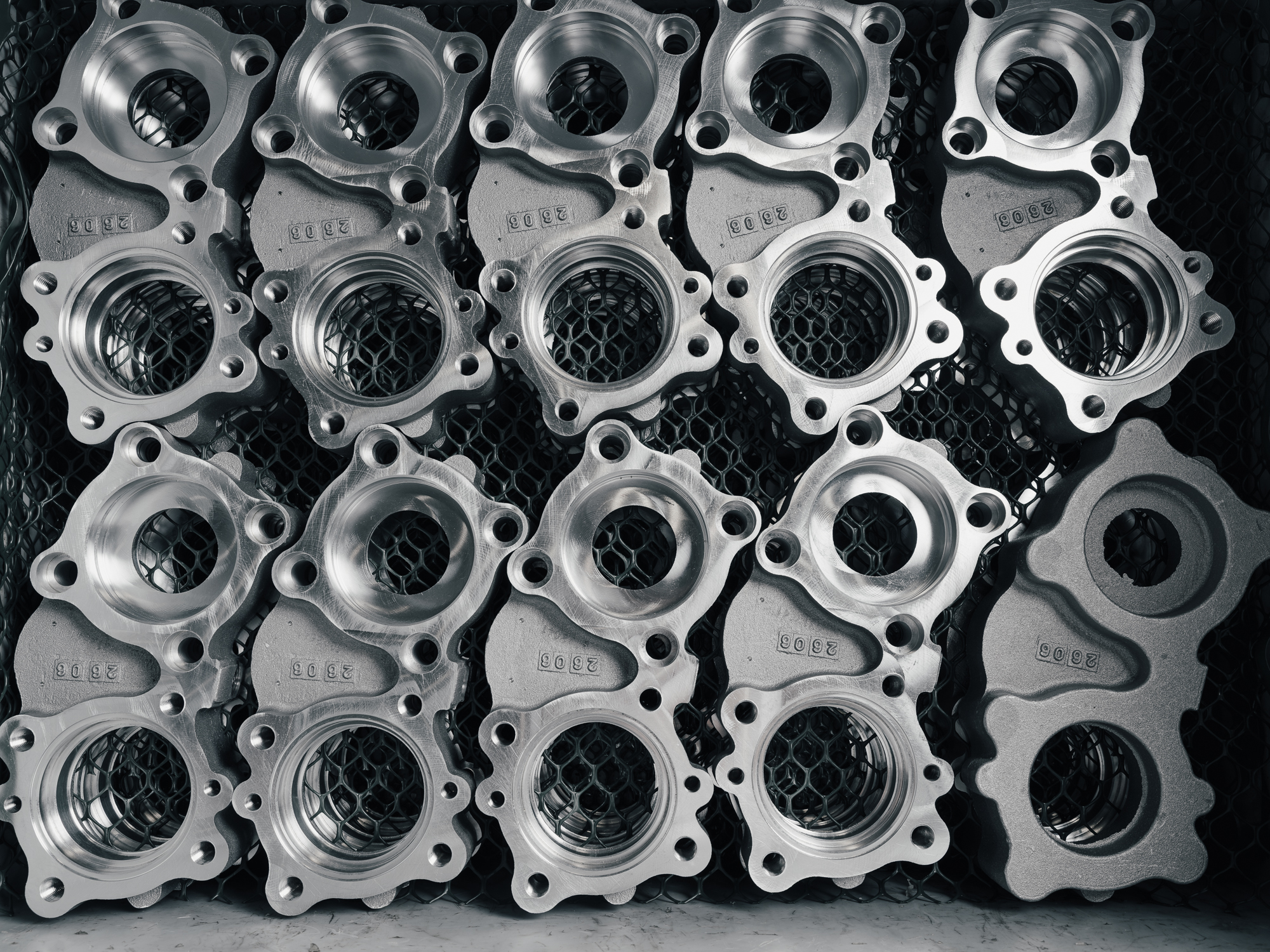
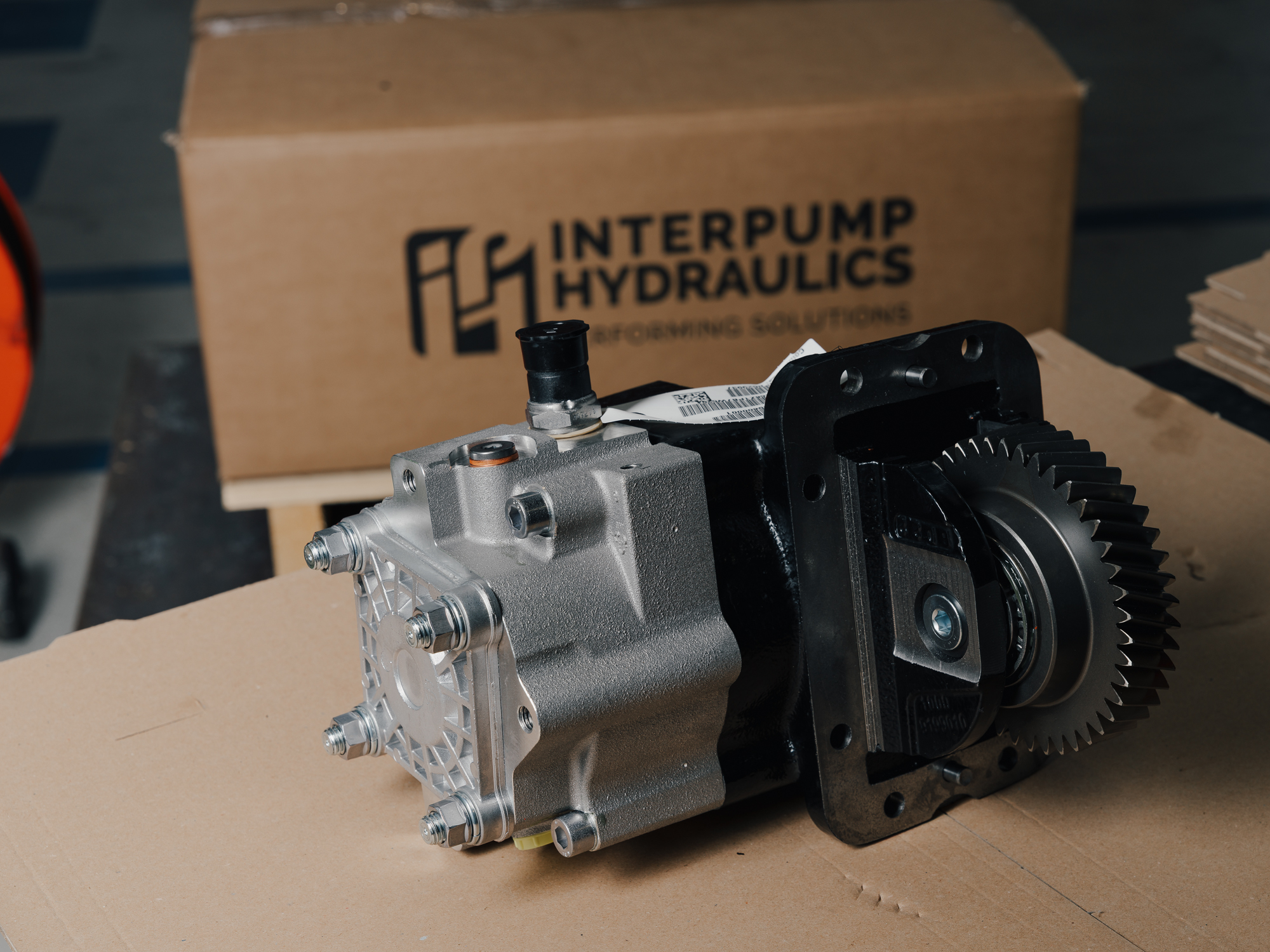
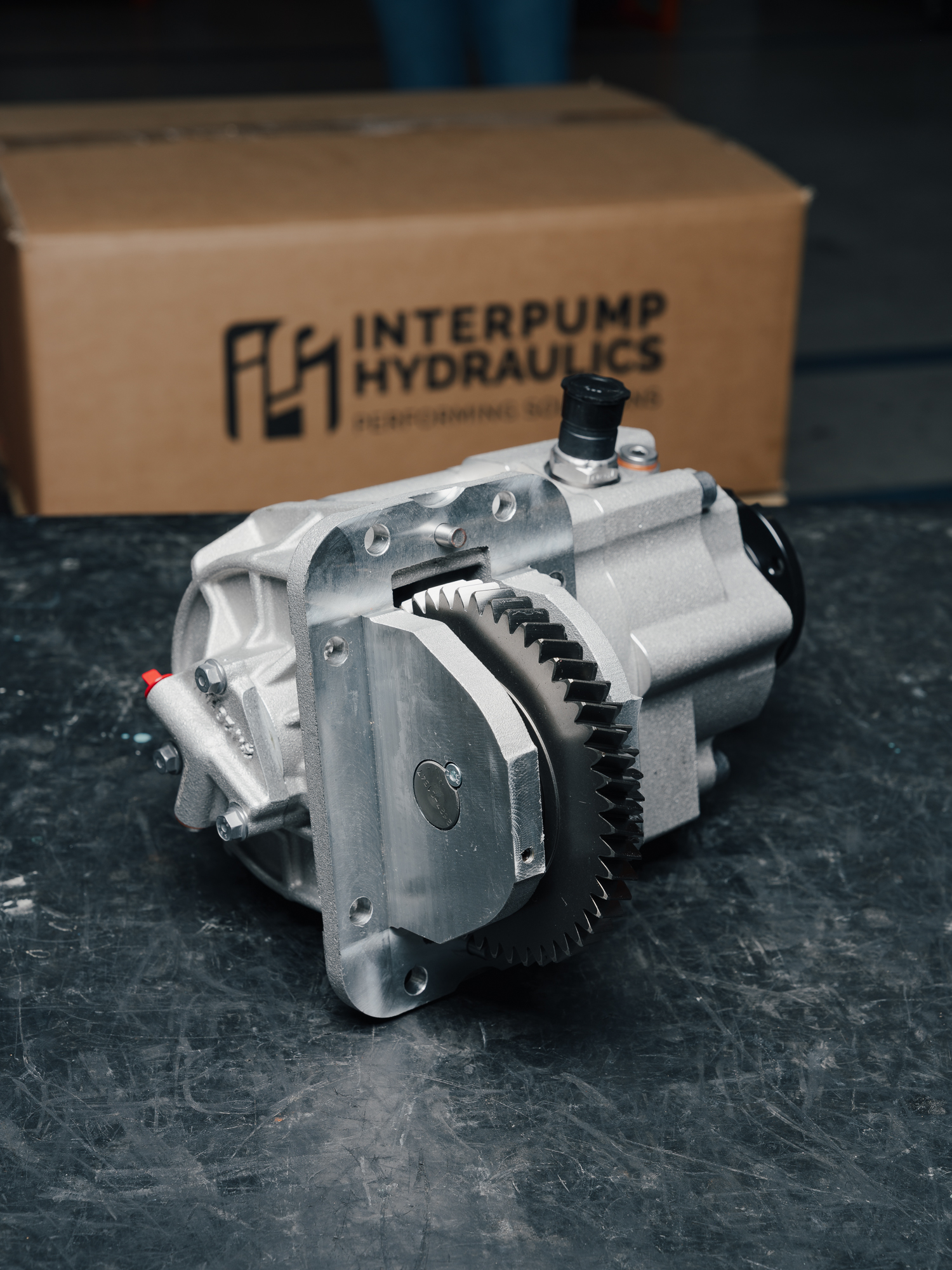
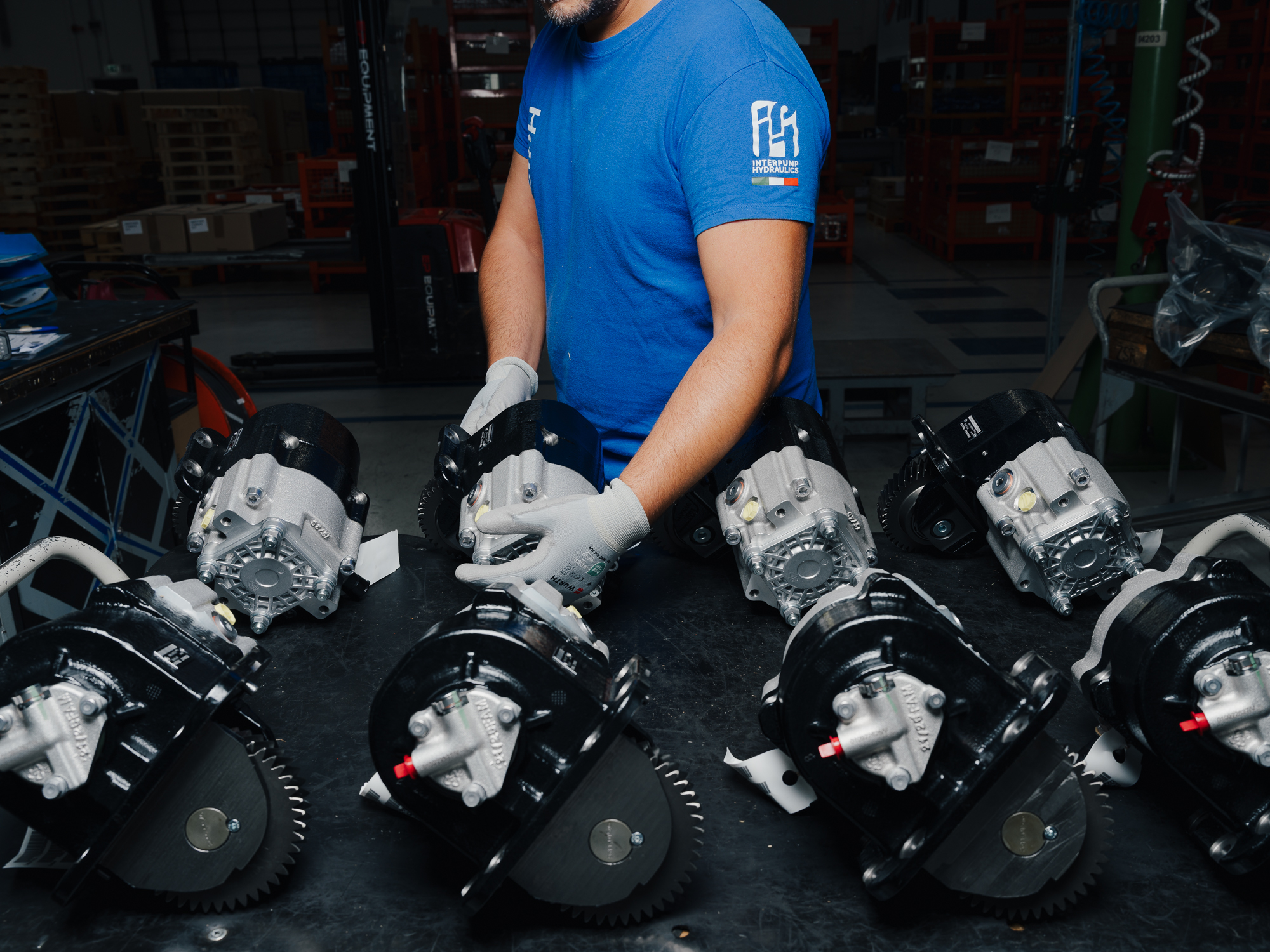
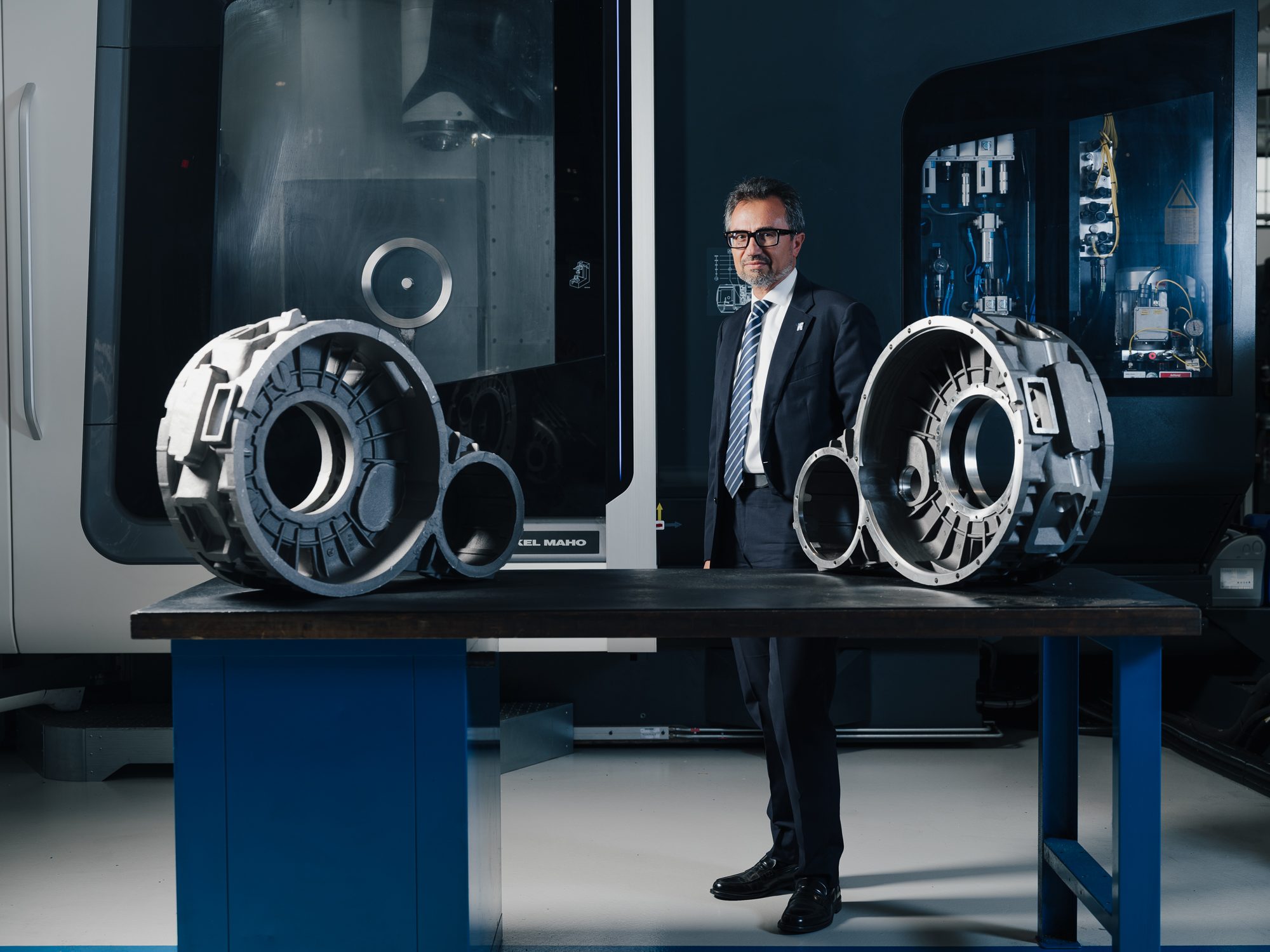
From its roots in the Bologna area to markets around the world: a portrait of a leading manufacturer of power take-offs, pumps, hydraulic cylinders and integrated systems for commercial vehicles. The common thread is not just hydraulics, but a distinctive way of doing business. For FARE INSIEME, Giampaolo Colletti interviews Enrico Lo Greco, President and CEO of Interpump Hydraulics.
by Giampaolo Colletti
@gpcolletti
Photocredit: Giacomo Maestri and Francesca Aufiero
A faded postcard from another era tells us a great deal about post-war Italy. The scene is a garage with a centre lathe. Beyond it is a country in need of a fresh start. It is Bologna in 1953, and reconstruction calls for lorries, machinery and infrastructure. Luciano Pederzani and Nino Zini identify a growing demand for a unit combining a power take-off and a pump for commercial vehicles, drawing inspiration from solutions they had seen on American military vehicles. This marked the beginning of PZB (Oleodinamica Pederzani and Zini). A modest entrepreneurial venture that, seventy years later, would become part of a multinational group with turnover exceeding €229 million and more than 1,500 employees worldwide.
Company profile. Interpump Hydraulics has a story deeply rooted in Emilia. Above all, though, it is a story woven from many different stories. In 1978, PZB was joined by Hydrocar, founded in Modena by Roberto Iseppi, Paolo Cleopatra and Pierluigi Pellegrini to develop new solutions for power take-offs and hydraulic handling systems for commercial vehicles. In 1982, five partners established H.S. Penta in premises measuring just 250 square metres in Castel Bolognese, specialising in hydraulic cylinders. Hydrocar and PZB joined Interpump Group in 1997 and 1998 respectively, followed by Penta in 2009. Ten years later, those separate identities came together under one brand: Interpump Hydraulics. However, this is not simply a story of acquisitions. It is the gradual creation of an integrated industrial system. “Our strength lay in our ability to integrate functions while rationalising our product ranges,” explains Enrico Lo Greco, President and CEO of Interpump Hydraulics. The challenge was to bring businesses together without erasing their identities. “Another important advantage was our respect for the values underpinning each individual company. Today, Interpump Hydraulics brings different experiences together in a genuinely synergistic way”.
From Emilia to the wider world. Working together, quite literally. Different companies, different skills, different generations. And a region that has become an integral part of the industrial model. Being founded in Emilia means being part of one of Europe's most concentrated manufacturing ecosystems, where engineering, automotive manufacturing, automation and specialist supply chains have influenced one another for decades. “Being founded in Emilia means belonging to a region with a strong industrial tradition, where skills, knowledge and manufacturing expertise form a widely shared and readily accessible resource”, Lo Greco explains. But there is also something less tangible: a work ethic founded on commitment, pragmatism and the understanding that success also requires “the determination to tackle the challenges of everyday work”. It was this philosophy that set the company on the path to international expansion. Today Interpump Hydraulics has production facilities in Europe, Asia and the Americas, with a direct commercial presence in thirteen countries. Yet globalisation has not meant abandoning its roots. “Our strength has been our ability to take what defines us to the rest of the world: Italian expertise, reflected in quality, care, know-how and attention to both products and processes”. That know-how is also passed on to the group's international manufacturing subsidiaries.
Business evolution. Meanwhile, the nature of the work itself is changing. Simply manufacturing and supplying a component is no longer enough. Value increasingly lies in integrated systems, customer service and, above all, co-design. For decades, Interpump Hydraulics has worked with some of the world's leading manufacturers of transmissions and commercial vehicles. “Co-design is a key strategic asset”, says Lo Greco. It involves not only designing and manufacturing products, but also listening to customers, anticipating their needs and adapting to constantly evolving requirements. These range from noise reduction and cleanliness to the principles of the circular economy. The aim is to move from being “suppliers of individual components” to partners capable of delivering complete solutions. This is also why the company opened its new headquarters in Sala Bolognese in September 2025: an investment of around €30 million, covering a total of 62,000 square metres, including 24,000 square metres for the production facility and 640 for research and development. At a time when companies are increasingly moving production to countries with lower operating costs, the decision to invest locally once again might seem surprising. “It reaffirms our determination to remain closely connected to our region and its wealth of expertise”. The new factory is intended to prepare the company for the challenges of the next years, supporting growth and strengthening its capacity for design, innovation and research. Within the factory itself, meanwhile, one of the most fascinating challenges facing modern industry is taking shape: the relationship between people and machines.Automation is gradually taking over more repetitive tasks, leaving people free to focus on more complex, higher-value activities. However, Lo Greco draws a crucial distinction: “Technology can learn to perform a task, but the real wealth of expertise lies in knowing how to do it: understanding situations, making decisions and finding solutions”.
https://podcast.confindustriaemilia.it/
Read the other interviews