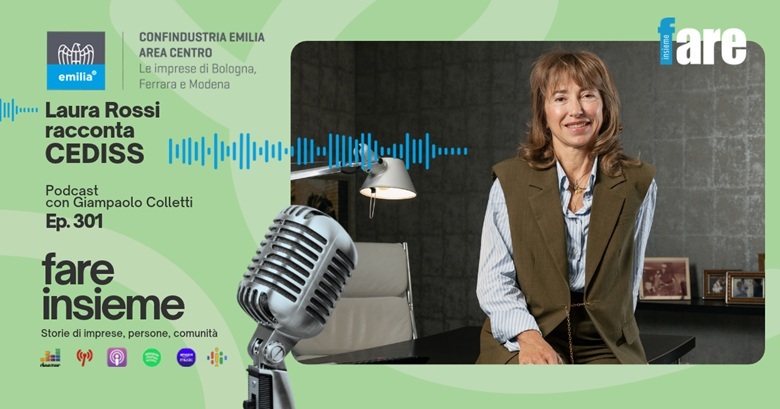

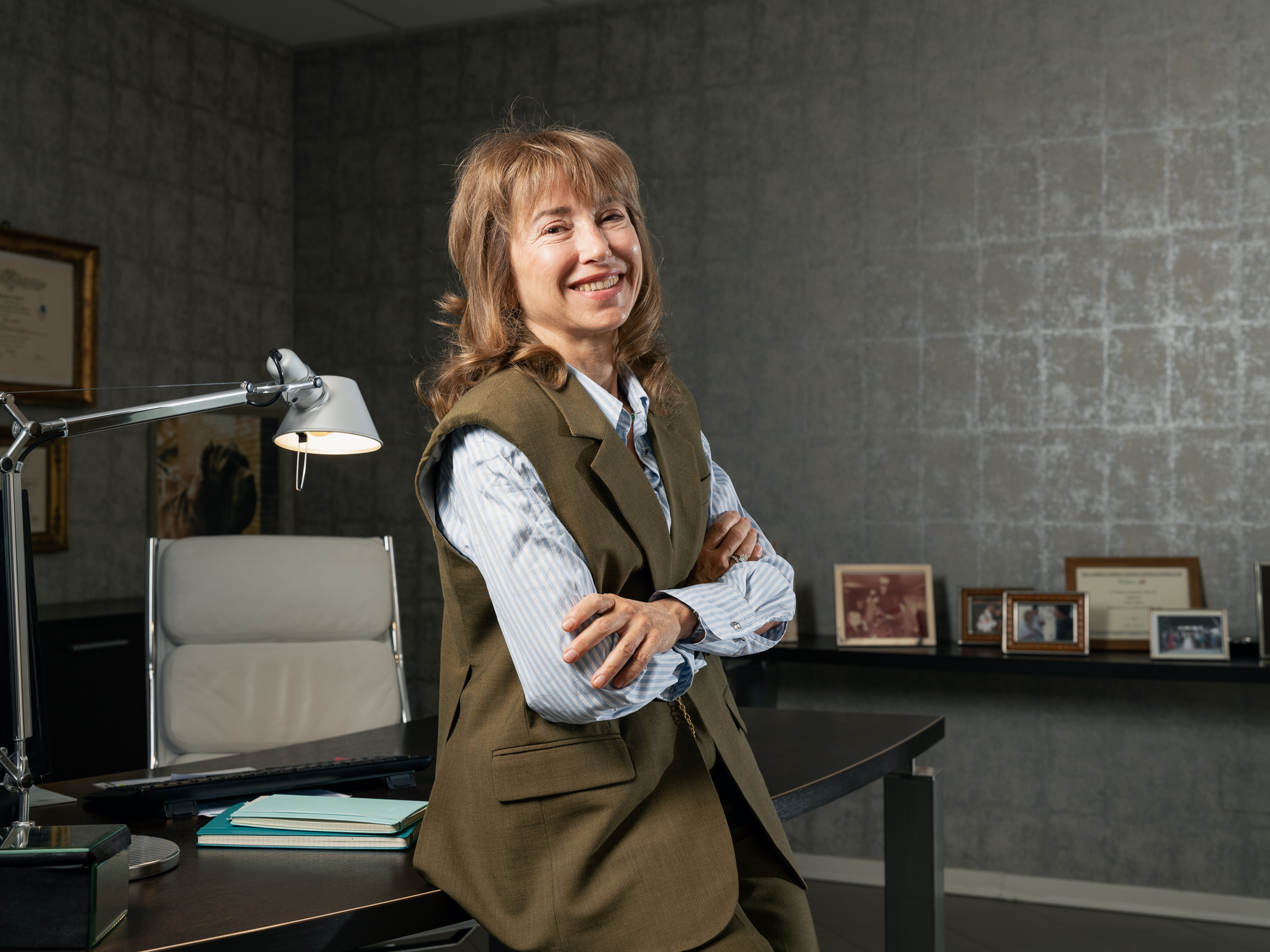
Founded in 1981 through the vision of a family from Emilia, Cediss has evolved over forty-five years of technological change, from intruder alarm systems to artificial intelligence. Today it designs integrated systems for buildings, infrastructure and vehicle fleets. Its philosophy is simple: security cannot be standardised; it must be built around people. For FARE INSIEME, Giampaolo Colletti interviews Laura Rossi, sole director of Cediss
by Giampaolo Colletti
@gpcolletti
Photocredit: Giacomo Maestri e Francesca Aufiero
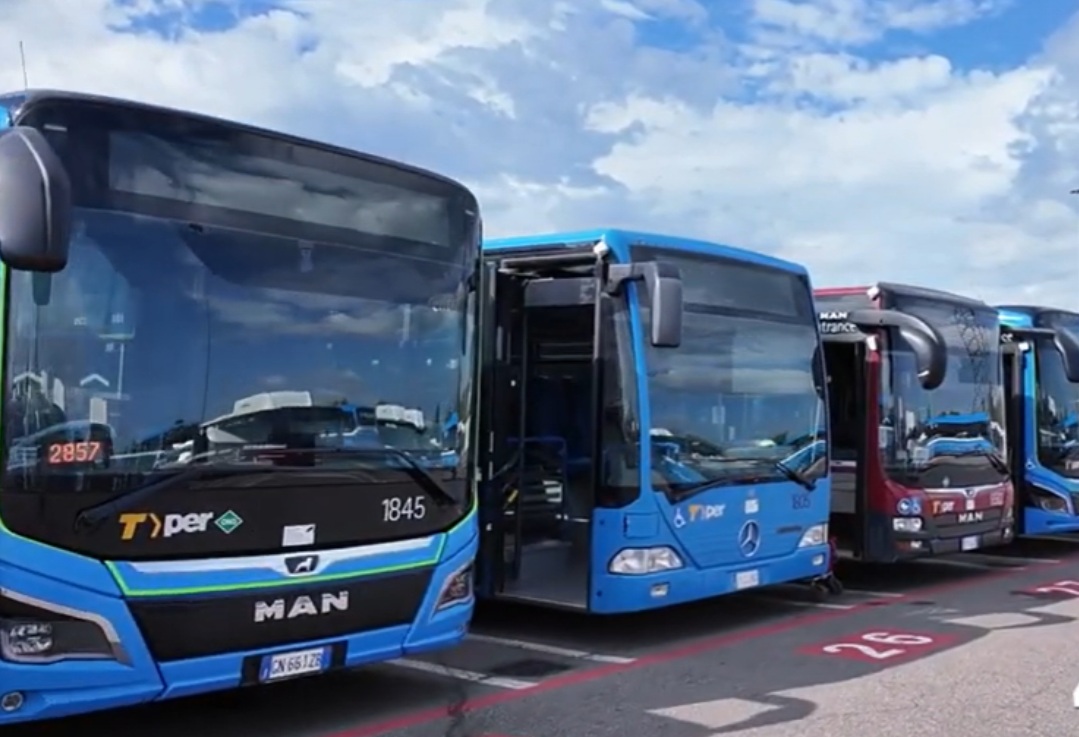
A bus making its way through the city, a hospital where services must continue uninterrupted, a school that needs protecting, a critical piece of infrastructure requiring constant monitoring. Different settings, one common need: to feel safe. However, security is not something you simply buy, nor is it a technology you install and forget about. It is something you build, adapt and update. Above all, it is something you design by listening. In Bologna, that belief laid the foundations for a business. Its story began forty-five years ago, long before artificial intelligence became part of everyday life, when building security depended primarily on sensors, circuits and intruder alarm control panels. “Cediss was founded in 1981 thanks to my parents' dedication and my mother's extraordinary female intuition, which enabled her to recognise new opportunities as they emerged in the market. We initially focused on manufacturing components for intruder alarm control panels. From the very beginning, we drew on the extensive design expertise of my father, Luigi Rossi From there, we continued to contribute our own ideas, innovating and growing until we became a leading player in the sector,” says Laura Rossi, sole director of Cediss. A family story in which technical expertise and the ability to anticipate market opportunities developed hand in hand.
Company profile. We are in Emilia, a manufacturing and technology hub where the ability to solve problems has become a defining strength. Cediss began as a company specialising in intruder alarm systems, but steadily broadened its scope over the years. Fire safety systems, video surveillance, vehicle security and infrastructure monitoring followed. Its early customers included the University of Bologna, hospitals and schools. These were not merely customers, but environments where technology was tested against real-world requirements. “Emilia has been our lifeblood: a demanding, pioneering region that shaped our technological culture. Working with local institutions and major infrastructure operators from the outset exposed us to complex challenges and exceptionally high standards,” Rossi explains. The turning point came between 1992 and 1993, when Laura joined the company. “I realised that if we wanted to embrace the future, we had to evolve, carrying forward the legacy of the female intuition that had guided us until then. So we moved beyond simply distributing products to build a business with a strong focus on innovation and the added value that design brings”. It marked a shift from products to solutions, and from selling equipment to taking responsibility for addressing increasingly complex challenges.
Tailor-made security. Today Cediss describes itself as a security and safety solutions provider operating through three business units: Special Systems, Fleet Protection and Area Surveillance. Three seemingly disparate areas, united by a single approach. Protecting a bus is not the same as protecting a hospital, and monitoring a geographical area requires different tools from those needed for an industrial building. “Being a solutions provider means we don't simply sell products: we design bespoke solutions for high-risk, highly complex situations. We step in when basic security is no longer enough, integrating specialised systems and predictive technologies,” Rossi explains. The analogy is almost that of a tailor: first you take the measurements, then you make the suit. That is why the company integrates technologies from different brands without tying itself to a single solution. Paradoxically, one of the biggest risks may be relying too heavily on technology. “The risk we underestimate most today is standardisation: the illusion that generic technology or a turnkey AI system is enough to protect a business. Our response is to listen closely to our customers and develop bespoke solutions that address real risks.”
Algorithms and people. Meanwhile, security is undergoing another transformation. Artificial intelligence enables video analytics to identify critical situations in real time and anticipate potential problems. But Cediss urges caution. “Integrating AI represents a major step forward for video analytics, but it is a tool that must be used with considerable restraint,” Rossi points out. Her position places human expertise firmly back at the centre. A system may recognise an anomaly, but understanding the context in which it occurs requires experience, judgement and responsibility. Yet the lesson emerging from Emilia is already clear: there can be no intelligent security without someone who understands what needs protecting. Even in an age of machines that can see and predict, the first form of prevention remains a profoundly human ability. The ability to listen.
https://podcast.confindustriaemilia.it/
Read the other interviews